Do Now: Look at the two maps and the three paintings below, then answer:
1. How did the plantation change after the Civil War? What stayed the same?
2. What changes did Frank Buchser capture in his paintings of African American life after the Civil War?
The Barrow plantation in 1860 and 1881. In 1881, Scribner's Monthly published maps of David C. Barrow's plantation in Oglethorpe County, Georgia, before and after emancipation. The maps below are a simplified version of those originals.
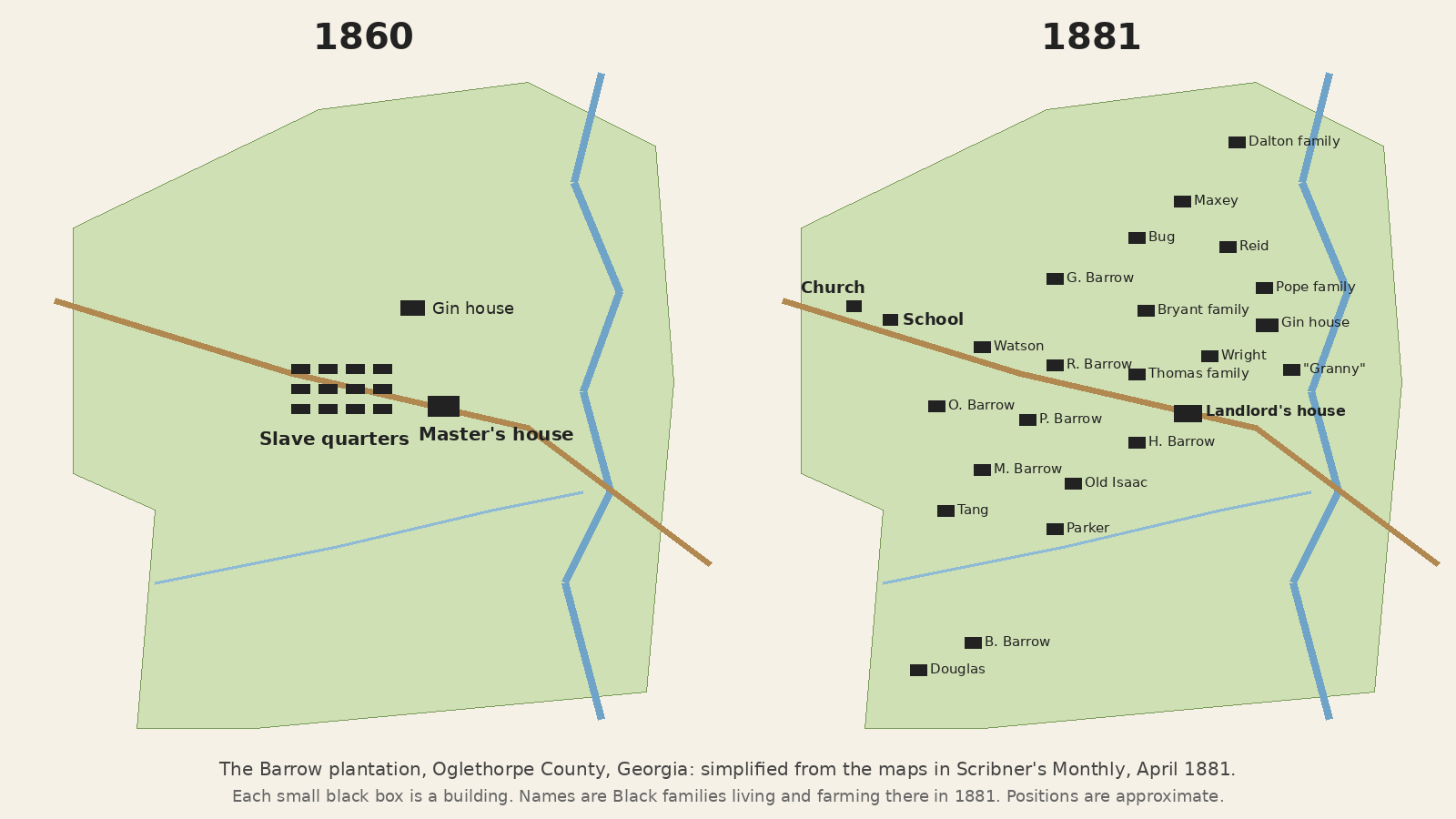 Simplified redrawing (made for this site) of the 1860 and 1881 maps of the Barrow plantation published in Scribner's Monthly, April 1881.
Frank Buchser's paintings. Frank Buchser (1828–1890) was a Swiss painter. In 1866, the Swiss government asked him to paint a scene from the American Civil War, because Switzerland had recently fought its own civil war between Protestants and Catholics. Buchser never painted that work, but he spent almost five years traveling the United States, painting major figures of the war (including Generals Sherman and Lee), the war-torn landscape, and scenes of African American life.
The Volunteer's Return, 1867
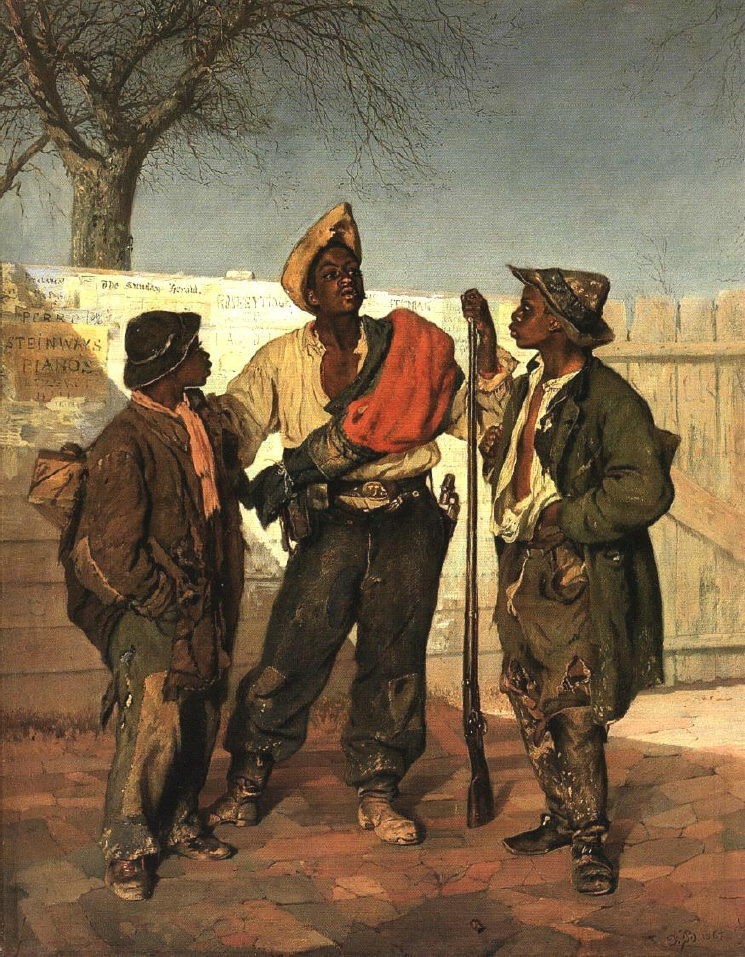 Frank Buchser, The Volunteer's Return, 1867, oil painting. Public domain.
Dolce far niente (Italian for "sweet idleness," or doing nothing), 1867
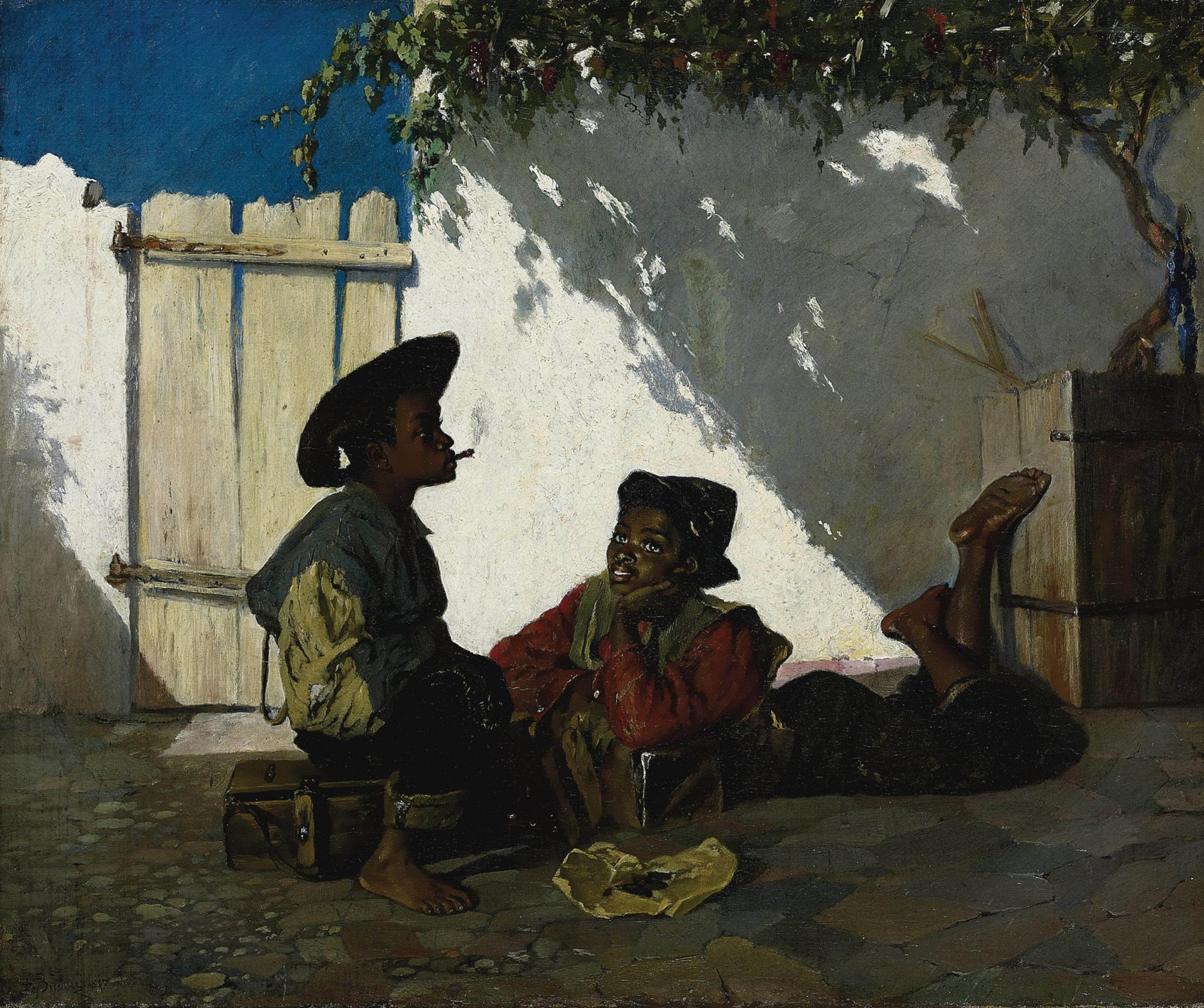 Frank Buchser, Dolce far niente (Doing Nothing), 1867, oil painting. Public domain.
The Song of Mary Blane, 1870, near Charlottesville, Virginia
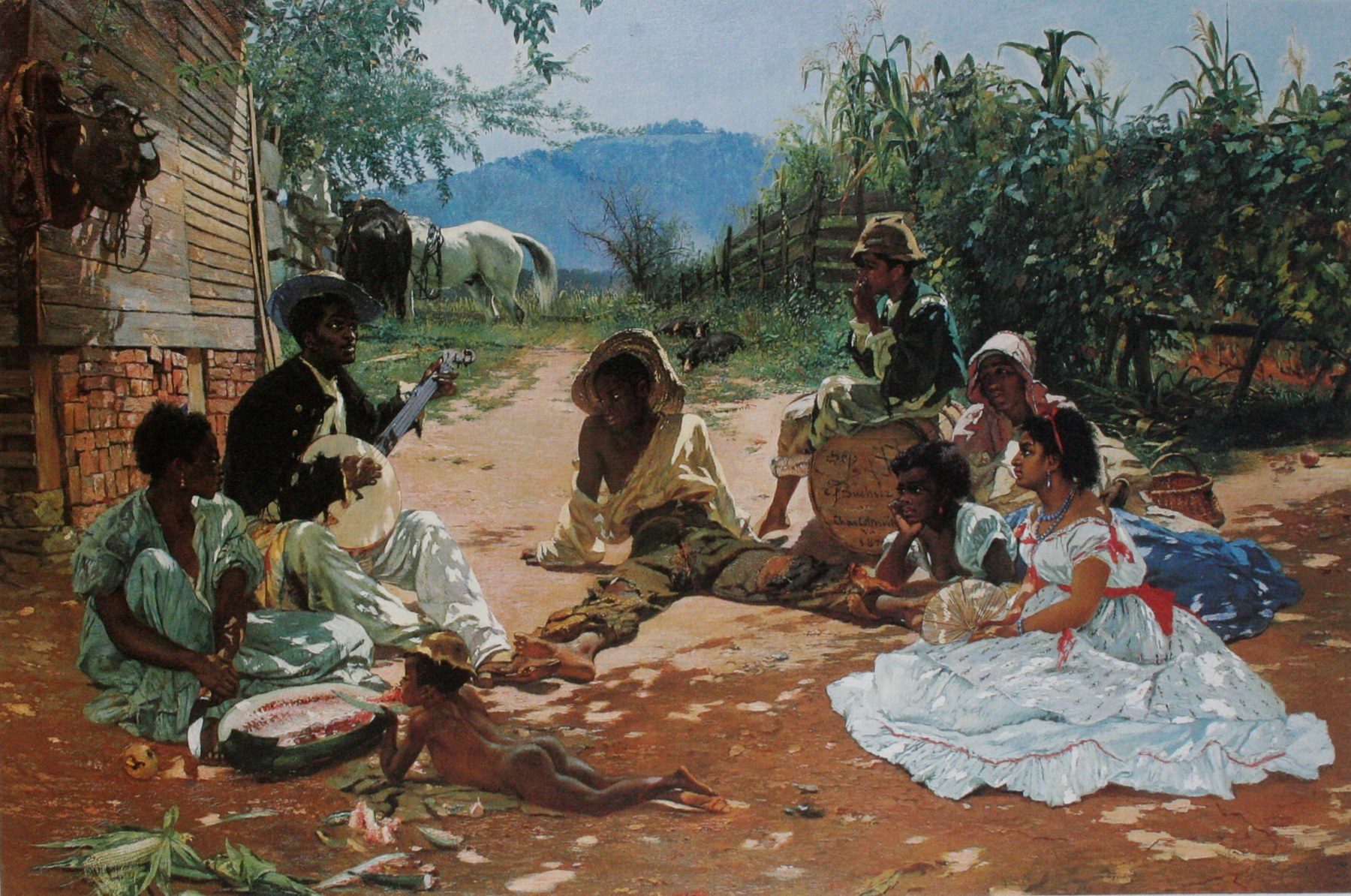 Frank Buchser, The Song of Mary Blane, 1870, oil painting. Public domain.
Background: land and freedom
For recently freed people, owning land was the only true break from the past. Even before the war ended, the federal government and the Union Army took steps to give confiscated land to formerly enslaved people. In November 1861, Union forces captured the Sea Islands of South Carolina. White landowners fled to the mainland, and about ten thousand formerly enslaved people took over the land, set up their own farms (some bought plots from the federal government), and worked with federal officials and Northern missionaries to build schools and hospitals.
On January 16, 1865, General William T. Sherman issued Special Field Order No. 15, setting aside land in Georgia and South Carolina as homesteads for freed people ("forty acres and a mule"). Within months, about 400,000 acres had been distributed. But Sherman lacked the legal power to make it permanent, and in the fall of 1865 President Andrew Johnson ordered most of the land returned to its former owners.
Congress also created the Freedmen's Bureau (officially the Bureau of Refugees, Freedmen, and Abandoned Lands) in March 1865 to feed, clothe, educate, and provide medical care for formerly enslaved people. Its commissioner, General Oliver O. Howard, issued Circular 13, ordering agents to set aside abandoned and confiscated land in 40-acre plots for freed people, but President Johnson overruled him. The Southern Homestead Act of 1866 opened 46 million acres of public land in Alabama, Arkansas, Florida, Louisiana, and Mississippi in 80-acre plots. Most of the land was poor, and few freed people had the money for tools, animals, and seed, so few were able to use it. By the end of 1866, most confiscated land had been returned to its former owners.
Background: Black Codes and sharecropping
After the war, Southern state legislatures passed restrictive laws known as the Black Codes to limit the gains of freed people. The laws varied by state, but they generally let officials arrest unemployed Black people and fine them for "vagrancy." Those who could not pay were hired out to white landowners, which kept a system of forced labor in place. Other laws barred Black people from owning or renting land, or limited them to farm labor or work as servants.
Unable to buy land, many freed people agreed to sharecropping contracts. Formerly enslaved people and poor white farmers gave a large share of their crop to landowners in exchange for the use of land, tools, and supplies. The landowner's share stayed the same even after bad harvests, illness, or falling crop prices, so sharecroppers rarely got out of debt. Sharecropping let freed people work without a white overseer, but their dependence on white landowners meant their lives were only somewhat better than under slavery.